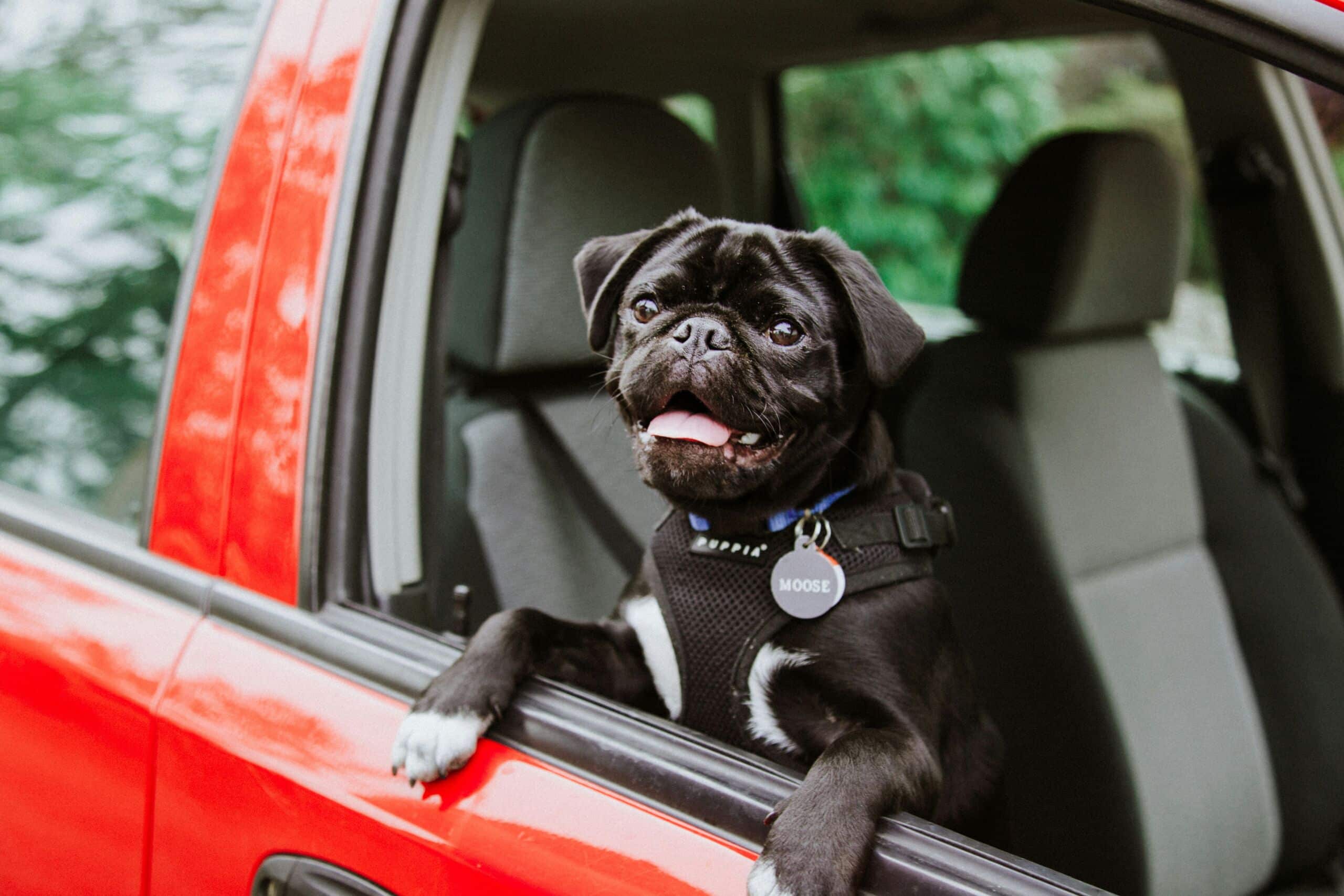
What Does Quebec Law Say About Transporting Pets?
In Quebec, regulations regarding animals in road vehicles primarily focus on preventing distractions and maintaining full control of the automobile.
Article 442 of the Highway Safety Code
Contrary to popular belief, Quebec’s Highway Safety Code does not explicitly state an obligation to buckle up a dog or cat with a seatbelt. However, it strictly regulates driving under Article 442, which states:
“No person may drive a road vehicle if the person’s view is obstructed in any way or if the person’s driving is obstructed in any way, notably because a person or animal is placed near the driver or obstructs access to the controls.”
In plain terms, if your dog sits on your lap, wanders over the center console, lies on the dashboard, or blocks your view of the rearview mirror, you are directly committing an infraction.
Fines and Penalties
A peace officer or police officer who observes an animal obstructing the driver’s vision or movements has the authority to pull the motorist over.
- Base Fine: An infraction under Article 442 generally results in a $100 fine, plus administrative costs and fees (often bringing the total bill to over $170).
- Civil Liability: In the event of an at-fault accident caused by an unrestrained pet’s distraction, your insurer could scrutinize the situation closely, not to mention potential legal consequences if third parties are injured.
The Physics of an Impact: A Deadly Hazard for Passengers
The Société de l’assurance automobile du Québec (SAAQ) and road safety experts frequently emphasize the risks associated with unsecured objects in the cabin. A free-roaming pet is no exception to this basic rule of physics.
During a collision or emergency braking at 50 km/h, the force of impact catapults all unsecured items forward. The effective mass of an object or body is multiplied by 20 to 30 times its actual weight:
- A 4 kg (9 lb) cat turns into a projectile launched with a force equivalent to roughly 100 kg.
- A medium-sized 20 kg (44 lb) dog becomes a projectile weighing the equivalent of 500 to 600 kg if it hits the front seat or windshield.
- A large 40 kg (88 lb) dog generates an impact force exceeding 1 ton.
At this speed, an animal thrown forward can fatally injure the driver or front-seat passengers.
The Fatal Trap of Airbags
Placing a small dog on the driver’s or front passenger’s lap is one of the worst mistakes you can make. In a collision, even a minor one, the airbag deploys at a speed of around 300 km/h. The force of the airbag slamming into an animal pushed against your chest is almost always fatal for the pet and can cause severe injuries to the driver.
Recommended Safety Equipment: How to Make the Right Choice?
To ensure the safety of all occupants and travel in full compliance with the law, a complete range of accessories tailored to every animal’s size is available today.
1. Safety Harness with Seatbelt Attachment (Ideal for Dogs)
This is the most popular and practical solution for dogs of all sizes.
Beware of Collars: Never attach a safety strap directly to your pet’s collar. In the event of an impact or sudden braking, the force exerted on the neck would cause strangulation or cervical spine fractures.
- Specialized Harness: Use a reinforced safety harness specifically designed for car travel and ideally crash-tested.
- Anchoring: The harness connects to the vehicle’s original seatbelt system using a universal buckle or a high-resistance carabiner. The strap should be adjusted to allow slight movement while keeping the dog from reaching the front seat.
2. Pet Carrier or Crate (Dogs and Cats)
A travel crate (made of hard plastic, metal, or vehicle-grade aluminum) remains the most secure option, especially for cats and small to medium-sized dogs.
- For Cats and Small Dogs: The safest place for a small travel carrier is not on the seat, but on the floorboard, directly behind the front seats. This is where movement during an impact is most restricted.
- For Crates Placed on Seats: They must be securely strapped down using the vehicle’s seatbelt.
- For Large Dogs: Reinforced aluminum cargo-area crates offer the highest possible protection during long trips.
3. Cargo Barriers and Dividers for SUVs
If you own a sport utility vehicle (SUV), station wagon, or hatchback, the rear cargo area is an excellent space for large dogs.
- Rigid Metal Barrier: This installs between the trunk area and the rear seats. In a collision, it prevents the animal from being thrown into the passenger area.
Safety Tip: Ensure the cargo space is free of heavy, loose objects that could injure the pet during a rollover or rear-end impact.
4 Common Mistakes to Avoid on Quebec Roads
❌ 1. Letting Your Dog Stick Its Head Out the Window
It’s a classic image, but an extremely risky one. At 70 km/h or 100 km/h on the highway, a small piece of gravel, dust, or an insect kicked up into the dog’s eyes or ears can cause ocular trauma or severe infections. Furthermore, a sharp turn or emergency maneuver could cause the animal to fall out of the car.
❌ 2. Heatstroke in Summer (Even with Windows Cracked)
Summer weather in Quebec can be unforgiving. Even when the outside temperature seems mild (around 20 °C to 22 °C), the greenhouse effect turns a parked car’s cabin into a virtual oven. In as little as 10 to 15 minutes, internal temperatures can top 40 °C. Leaving windows slightly open does not lower the temperature enough to prevent often-fatal heatstroke.
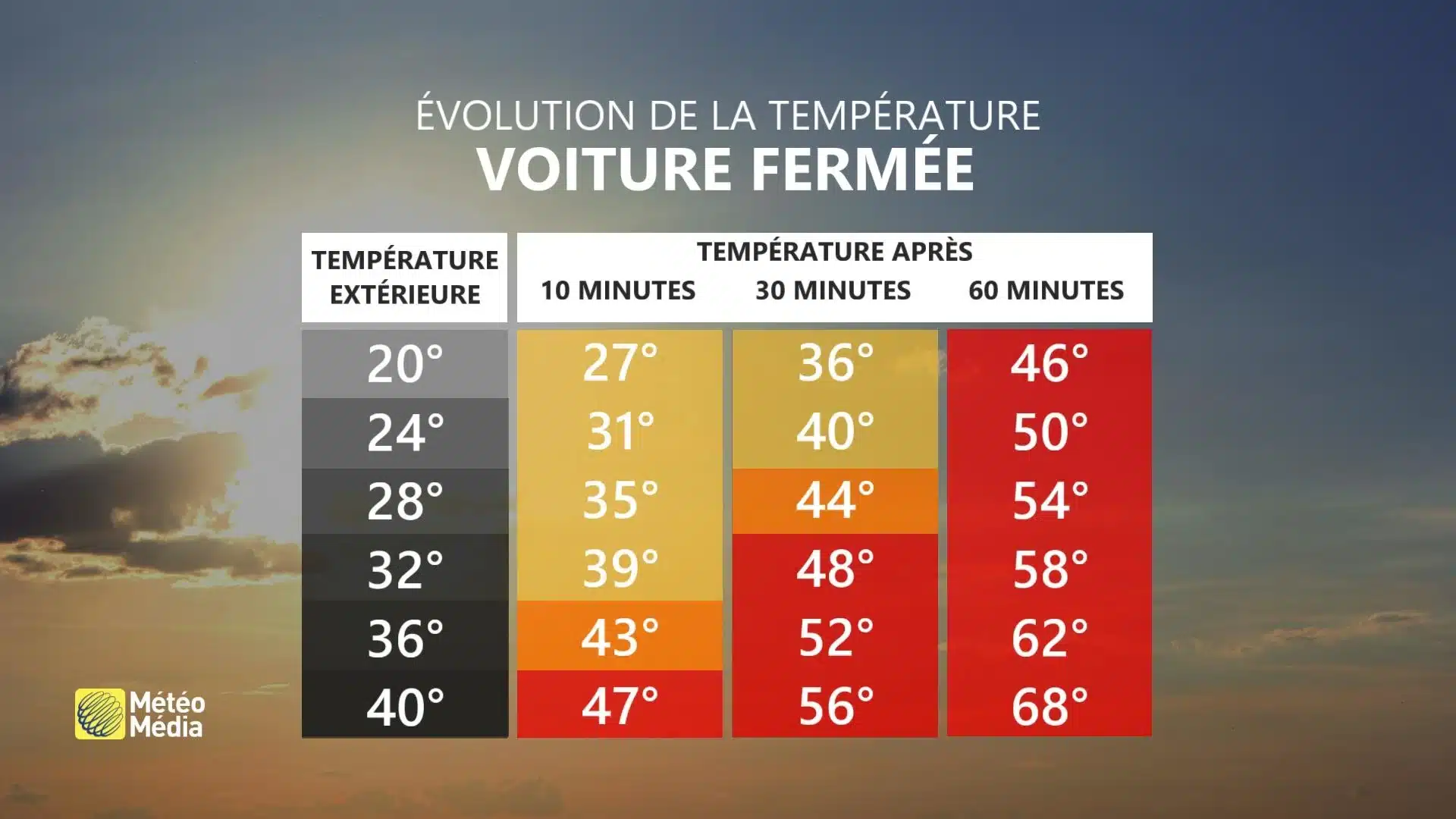
Source : Météo Media
❌ 3. Failing to Plan Rest Stops on Road Trips
During long drives across Quebec, pets accumulate stress and fatigue. It is recommended to pull over every 2 to 3 hoursat a rest area to:
- Allow your pet to hydrate with fresh water.
- Let them relieve themselves and stretch their legs (always kept on a leash).
- Air out the vehicle cabin.
❌ 4. Letting the Pet Jump Out as Soon as the Door Opens
When parked in a commercial parking lot or along the roadside, an excited pet can quickly slip out and risk getting hit by another vehicle. Make it a habit to hold your dog’s leash before opening the door or tailgate.
In summary
Hitting the road with your pet should always be a pleasure. By applying simple tethering practices and common sense, you eliminate distractions, avoid Highway Safety Code infractions, and above all save the life of your faithful companion.
📋 Your Pre-Drive Checklist:
✅ Pet is Restrained: Harness buckled in or travel crate anchored.
✅ Clear Field of Vision: The driver maintains an unobstructed 360° view.
✅ Windows Locked: Opened moderately, with no possibility for the pet to stick its head out.
✅ Water and Leash Within Reach: Ready for the next rest stop.
Have a safe trip to you and your four-legged companions!