Service Dog in Quebec: Role, Criteria and the Mission of Chiens TOGO
Service Dog in Quebec: Role, Criteria and the Mission of Chiens TOGO
PUBLISHED AUGUST 25, 2026
8 MIN READ
Dogs hold a unique place in our lives. But for some people, their role goes far beyond companionship: a dog can become a true everyday partner, specially trained to meet specific needs.
In this article, discover what a service dog really is, who can benefit from one, and learn more about the mission of Les Chiens TOGO.
WRITTEN BY:
Agathe Andrieu
Marketing Coordinator
Summary
In Quebec, a dog accompanying its handler in a public place is not always simply a pet. In some cases, it is a service dog: a specially trained partner that performs specific tasks to meet its handler’s needs, whether related to a physical or sensory disability or certain mental health conditions.
Yet the term is still often misunderstood. Service dogs, emotional support dogs, and simply well-trained dogs are frequently confused with one another. As a result, it can be difficult to know what the eligibility criteria are, how to obtain a service dog, or what rights apply in public places.
In this article, we answer some of the most common questions about service dogs in Quebec and introduce Les Chiens TOGO, a Quebec organization that works with shelter dogs and trains them as psychiatric service dogs to support people who need them.
What You Need to Know About Service Dogs in Quebec
- A service dog may be considered an assistive device when it is trained to compensate for certain limitations or meet the specific needs of its handler.
- Service dogs may have access rights in various public places when accompanying their handler.
- There is no single program or process that applies to every situation: criteria vary depending on the person’s needs and the organization training the dog.
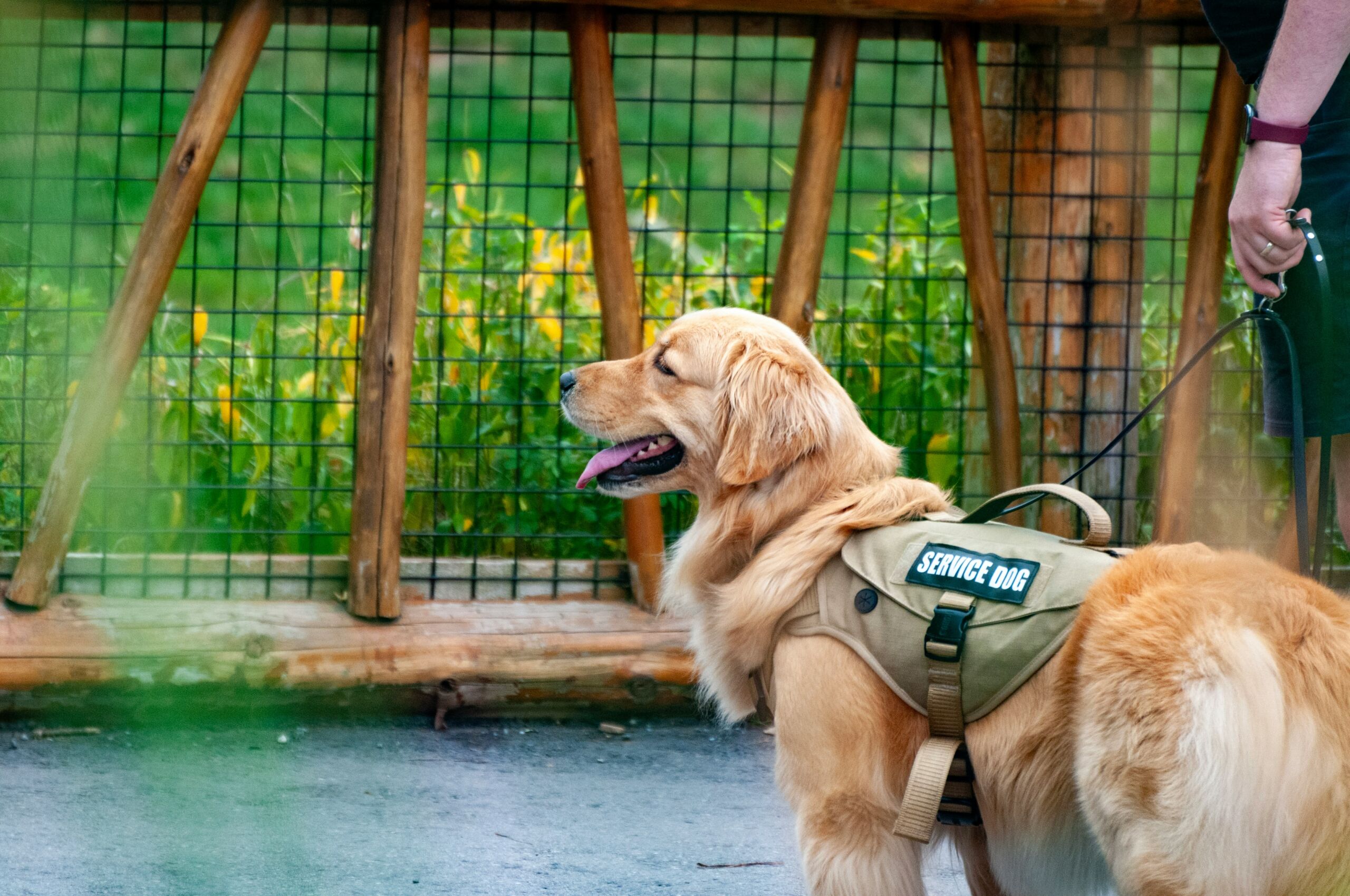
- Simply wearing a harness or identification accessory does not, on its own, make a dog a service dog. The dog must have received training appropriate to its role.
1. Who Can Have a Service Dog?
This depends primarily on the person’s needs and the type of service dog being sought.
Physical Disabilities
Certain Quebec programs are intended for people with a permanent physical disability who require a dog on a daily basis to assist them with certain activities, such as mobility, transfers, or retrieving objects.
Mental Health
Service dogs can also support certain people living with mental health conditions. Les Chiens TOGO provides psychiatric service dogs through programs designed for specific groups, including veterans, military personnel, and emergency responders.
Emergency Responders
TOGO also works with people in emergency-response professions and offers an approach that combines canine intervention with psychosocial support.
Eligibility requirements vary depending on the program. In the case of TOGO, a referral from a healthcare professionalis required to begin the process of adopting a psychiatric service dog.
There is therefore no single answer to the question, “Who is eligible for a service dog?” The best way to determine whether this type of support is appropriate for a specific situation is to contact a specialized organization directly.
2. What Are the Criteria for Getting a Service Dog?
Criteria vary between programs, but several factors are generally important:
- The need — the person must have needs that can be addressed by a specially trained dog.
- The person’s ability — they must be able to care for the dog and use it safely.
- The dog’s abilities — the dog must have an appropriate temperament and be able to learn and perform its tasks reliably.
- Training — the dog must receive training adapted to the needs of its future handler and be able to function in different environments.
For government programs related to certain physical disabilities, specific criteria apply to both the individual and the dog.
The simplest approach is therefore to contact a service dog organization directly to learn about the criteria for the program that interests you.
3. How Can You Have Your Dog Recognized as a Service Dog?
There is no “universal certificate” that, on its own, can turn a pet dog into a service dog in Quebec.
Recognition practices and procedures can vary depending on the organization and situation. The Quebec government has also published work addressing the framework and recognition of service dogs.
The appropriate approach is therefore to work with a specialized organization that can assess the person’s needs, the dog’s abilities, and the training required.
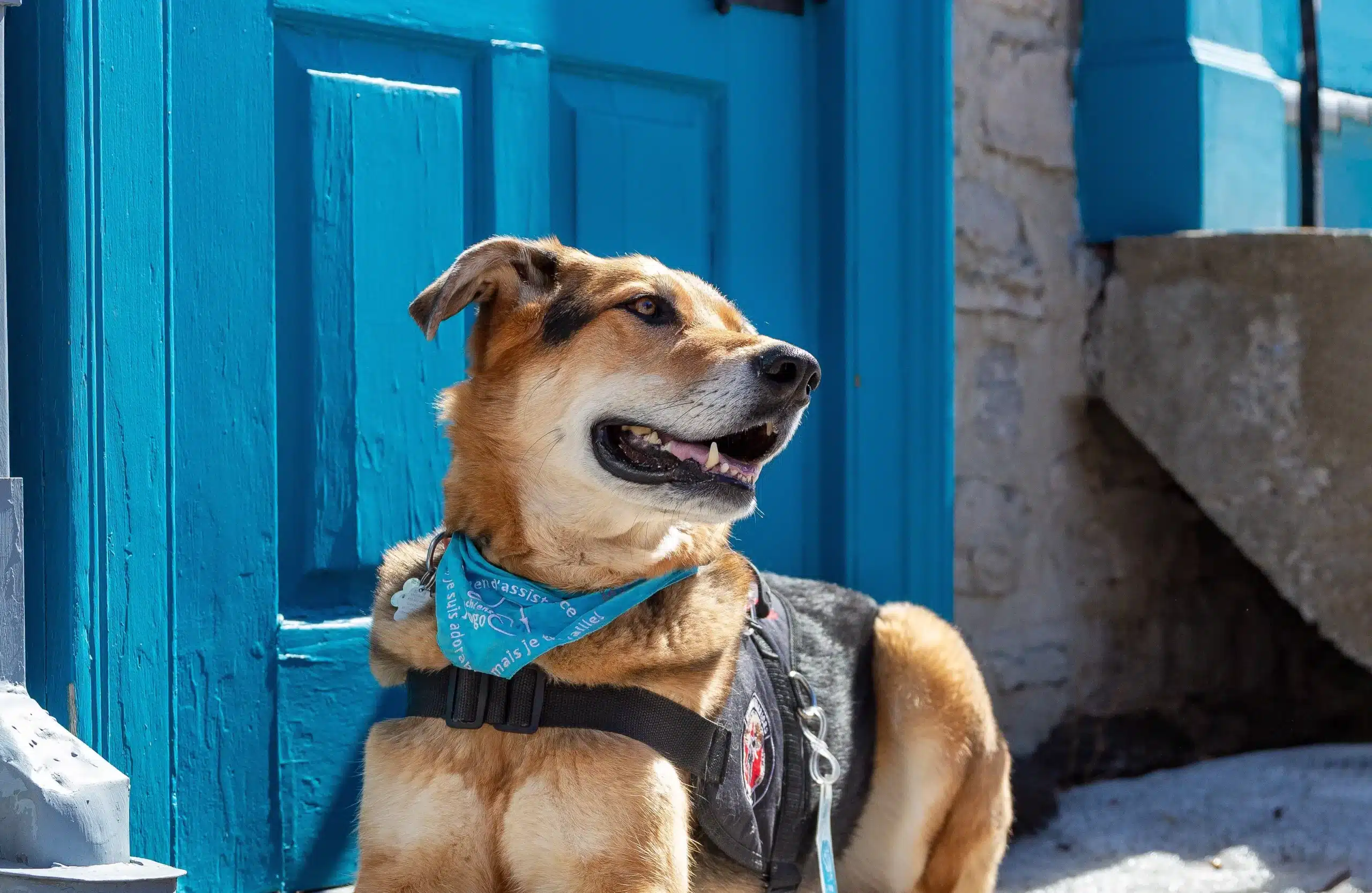
Simply putting a harness, bandana, or specific identification on a dog is not enough to give it service dog status.
4. Service Dog vs. Emotional Support Dog: What’s the Difference?
These two terms are sometimes used as though they meant the same thing, but their roles can be quite different.
| Service Dog | Emotional Support Dog | |
|---|---|---|
| Role | Performs specific tasks related to its handler’s needs | Primarily provides companionship and emotional support |
| Training | Specialized training to meet its handler’s needs | Not necessarily trained to perform specific tasks |
| Needs | Addresses specific needs related to a disability or certain health conditions | Primarily provides comfort and companionship |
| Access to public places | Access rights may apply depending on the situation | Does not automatically have the same access rights |
A dog that naturally provides comfort to its handler is therefore not automatically considered a service dog.
5. Do Service Dogs Have Access to Public Places?
Service dogs may accompany their handlers in various public places when they are necessary for their daily lives.
This may include stores, restaurants, workplaces, housing, or certain forms of transportation, depending on the applicable rules.
When a service dog is working, it is important to respect its role. As with any working animal, it is best to:
- avoid distracting the dog;
- avoid calling the dog;
- avoid petting the dog without its handler’s permission;
- allow the handler to manage interactions with their dog.
The dog needs to remain focused on the tasks for which it has been trained.
6. Can a Service Dog Help With Anxiety?
Yes. In certain situations, a dog can be trained to address needs related to mental health.
A psychiatric service dog can be trained to perform specific tasks adapted to its handler’s needs. However, this should not be confused with a dog that simply provides comfort or a reassuring presence.
At Les Chiens TOGO, the dog is part of a broader approach that also includes professional psychosocial support. The organization works with people living with operational stress injuries.
The dog therefore becomes a partner within a broader support process, rather than a stand-alone solution.
Les Chiens TOGO: Saving Two Lives at Once
Founded in 2015, Les Chiens TOGO is a Quebec charitable organization that supports veterans, military personnel, and emergency responders through prevention and support related to operational stress injuries.
The organization offers a multidisciplinary approach that combines psychosocial support and canine intervention.
Its team brings together different areas of expertise, including psychosocial professionals, dog trainers, veterinarians, educators, and researchers.
But what makes its mission particularly unique is the role played by the dogs.
Shelter Dogs Getting a Second Chance
Chiens TOGO works with shelter partners to identify dogs that may be suited to its program.
Of course, not every dog can become a service dog. Their temperament, abilities, behaviour, and capacity to function in different environments must be assessed.
Once a dog is selected, it receives guidance and training adapted to its future role.
This approach creates a connection between a dog in need of a second chance and a person in need of a partner to support them.
This is what TOGO captures with a particularly powerful idea: saving two lives at once..
How Does a Dog Become a TOGO Service Dog?
The process is based on two main components.
1. Selecting and Training the Dog
The dog is assessed based on its temperament, abilities, and capacity to function in different environments.
Once selected, it receives training adapted to the requirements of its future role.
2. Building the Partnership
The work does not stop once the dog has been trained.
The relationship between the dog and its handler also needs to develop. Together, they learn how to communicate, work as a team, and integrate the dog’s tasks into everyday life.
It is this relationship that gradually transforms the dog into a true assistance partner.
A Human-Dog Relationship That Can Change Lives
At Pitou Minou & Compagnons, we know how important dogs are in the lives of their humans.
They join us on walks, become part of our routines, share our moments of play, and are there throughout our days. They become part of the family and develop relationships with us based on trust and companionship.
Service dogs show us another dimension of this relationship.
When a dog is specially trained to meet its handler’s needs, it can become much more than a companion: it becomes a true everyday partner.
The mission of Chiens TOGO perfectly illustrates this relationship. By giving certain dogs a second chance and preparing them to support people who need them, the organization creates bonds that can transform two lives.
FAQ — Service Dogs
Eligibility depends on the person’s needs, situation, and the type of service dog being sought. Criteria vary between programs and organizations. It is recommended to contact a specialized organization to learn about the requirements that apply to your situation.
Criteria vary depending on the program. They may include the person’s needs, the tasks the dog must perform, the person’s ability to care for the animal, and the dog’s ability to reliably perform its tasks in different environments.
There is no universal certificate that automatically establishes a dog as a service dog. The process depends on the program and organization involved. It is best to contact a specialized organization rather than simply seeking a certificate.
In certain situations, a dog can be trained to address mental health-related needs. However, a psychiatric service dog must be trained to perform specific tasks adapted to its handler’s needs. A dog that simply provides comfort is not automatically considered a service dog.
A service dog is trained to perform specific tasks related to its handler’s needs. An emotional support dog primarily provides companionship and emotional comfort. The two therefore do not necessarily have the same criteria or access rights.
The first step is to identify your needs and contact a specialized organization. They can explain the eligibility criteria, assessment process, and steps involved.
For a psychiatric service dog from Chiens TOGO, a referral from a healthcare professional is required to begin the adoption process.
The cost varies depending on the type of dog, organization, and program. In the case of Chiens TOGO, service dogs are provided free of charge to eligible beneficiaries thanks to the support of partners and donors.
No. A dog must have an appropriate temperament, certain abilities, and the capacity to learn and reliably perform its tasks. Specialized assessment and training are therefore necessary.
Conclusion
A service dog is much more than a specially trained dog: it is a partner who supports its handler in everyday life and meets specific needs.
The mission of Les Chiens TOGO takes this idea even further by bringing together dogs in need of a second chance with people who need a partner to support them.
Two lives. One bond. A relationship that can change everything. 🐾
To learn more about the mission and programs of Chiens TOGO, visit their website